

Soil mites might be tiny, but they play a huge role in our ecosystems. These little creatures are often overlooked, but when you take a closer look, especially through pictures of soil mites, you’ll find they are fascinating and diverse. This article will explore how images can help us understand these critters better, their importance in nature, and even the artistic side of capturing their beauty.
Key Takeaways
- Pictures of soil mites reveal their diversity and intricate features.
- Soil mites are essential decomposers that contribute to soil health.
- Macro photography and electron microscopy are key techniques for capturing soil mites.
- Images of soil mites can educate the public and raise awareness about soil ecosystems.
- Artistic interpretations of soil mites can highlight their beauty and importance.
Understanding Soil Mites Through Images
The Importance of Visual Documentation
When it comes to understanding the tiny world beneath our feet, pictures are super important. Visual documentation allows scientists and enthusiasts alike to observe the intricate details of soil mites that would otherwise be impossible to see with the naked eye. Think about it – these creatures are often smaller than a millimeter! Images help us study their morphology, behavior, and habitats in a way that descriptions alone simply can’t capture. It’s like trying to describe a painting versus actually seeing it. No comparison, right?
Types of Soil Mites Captured in Pictures
You wouldn’t believe the variety of soil mites out there! Pictures showcase this amazing diversity. You’ve got your Oribatida (the armored mites), Mesostigmata (often predatory), and Astigmata (some are even pests). Each group has unique characteristics, and images help us to differentiate them. For example, you might see:
- Oribatida: Heavily sclerotized bodies, often with elaborate ornamentation.
- Mesostigmata: Faster moving, with distinct mouthparts for predation.
- Astigmata: Softer bodies, often found in decaying organic matter.
The cool thing is that different imaging techniques can highlight different features. Light microscopy might show overall body shape and color, while electron microscopy reveals the tiniest details of their exoskeletons. It’s all about choosing the right tool for the job.
Techniques for Capturing Soil Mite Images
Photographing soil mites isn’t exactly a walk in the park. It requires specialized equipment and techniques. Here’s a quick rundown:
- Macro Photography: This involves using macro lenses and specialized lighting to get close-up shots of live or preserved specimens. It’s tricky because of the shallow depth of field at high magnifications.
- Scanning Electron Microscopy (SEM): SEM provides incredibly detailed images of surface structures. Specimens need to be carefully prepared (dried, coated) before imaging. The electron challenge is real, but the results are worth it.
- Confocal Microscopy: This technique allows for optical sectioning, creating 3D reconstructions of mites. It’s great for studying internal structures without physically dissecting the specimen.
It’s a whole process, but the images we get are invaluable for research and education.
The Role of Soil Mites in Ecosystems
Soil Mites as Decomposers
Soil mites are tiny, but they’re mighty when it comes to breaking down organic matter. Think of them as the unsung heroes of the soil, constantly working to recycle dead plants and animals. This decomposition process releases essential nutrients back into the soil, which plants then use to grow. Without soil mites, we’d have a huge buildup of dead stuff, and plants would struggle to get the food they need. It’s a dirty job, but someone’s gotta do it, and these little guys are perfect for it. They are a key part of soil microarthropods.
Interactions with Other Soil Organisms
It’s not a solo act for soil mites; they’re part of a whole community down there. They interact with all sorts of other creatures, from bacteria and fungi to nematodes and even larger insects. Some mites are predators, feeding on nematodes or other small organisms, while others might be prey for bigger predators. It’s a complex food web, and soil mites play a crucial role in keeping everything in balance. They also have interesting relationships with beetles. Some mites even hitch rides on beetles to get around!
Impact on Soil Health and Fertility
Soil mites have a direct impact on how healthy and fertile the soil is. By breaking down organic matter, they improve soil structure, making it easier for water and air to move through. This is good for plant roots, which need both to thrive. They also help to distribute beneficial fungi and bacteria throughout the soil. A healthy soil mite population means healthier soil, which in turn means healthier plants and a more productive ecosystem. It’s all connected, and these tiny creatures are a vital link in the chain.
Soil is the most biologically diverse part of the Earth. The soil on a farm includes thousands and thousands of beetles, springtails, mites, worms, spiders, ants, nematodes and other organisms. This multitude of soil organisms engineers pathways for rainwater, provides nutrients for plants and breaks down organic matter from previous crops.
Here’s a quick look at how soil mites contribute to soil health:
- Improved soil structure
- Increased nutrient availability
- Enhanced water infiltration
- Better aeration for roots
Capturing the Beauty of Soil Mites
Macro Photography Techniques
Getting good pictures of soil mites with macro photography can be tricky, but it’s super rewarding. The key is to get really close while keeping everything in focus. You’ll need a macro lens, obviously, and a steady hand (or a tripod!). Lighting is also important; natural light can work, but sometimes you need to use a ring flash or some other kind of artificial light to really bring out the details. Experiment with different angles and settings to see what works best for each mite. Don’t be afraid to take a ton of pictures – you can always pick the best ones later. You can find a photographic guide online to help you identify the different species.
- Use a macro lens with a high magnification ratio.
- Control your depth of field by adjusting the aperture.
- Stabilize your camera with a tripod or beanbag.
Macro photography of soil mites requires patience and precision. The tiny size of these creatures means that even the slightest movement can throw off your focus. It’s a good idea to practice with less challenging subjects first to get a feel for your equipment and settings.
Using Electron Microscopy for Detail
If you really want to see the intricate details of soil mites, electron microscopy is the way to go. This technique uses beams of electrons to create images at a much higher resolution than regular microscopes. There are two main types: scanning electron microscopy (SEM), which shows the surface of the mite in amazing detail, and transmission electron microscopy (TEM), which lets you see inside the mite. Preparing the samples for electron microscopy can be a bit involved, but the results are totally worth it. You can see things like the tiny hairs on their bodies and the complex structures of their mouthparts. It’s like entering a whole new world. It takes time to prepare a SEM for a scientific publication.
Editing and Enhancing Soil Mite Images
Once you’ve got your pictures, whether they’re from a macro lens or an electron microscope, you can use editing software to make them even better. You can adjust the brightness, contrast, and color to bring out the details and make the mite really pop. You can also remove any distracting background elements or blemishes. Just be careful not to go too far with the editing – you want to make sure the image still accurately represents the mite. Sometimes, adding color to a black and white electron microscope image can make it easier to see the different parts. It’s all about finding the right balance between enhancing the image and keeping it real. You can get a Snail’s Eye View of the mites with the right equipment.
- Adjust brightness and contrast to highlight details.
- Remove distracting background elements.
- Correct color balance for accurate representation.
Diversity of Soil Mite Species

Common Soil Mite Species in Different Regions
Soil mites are everywhere, but what types you find really depends on where you’re looking. Think of it like this: the mites in your backyard are probably different from those in a forest or a desert. Climate, soil type, and even the plants growing in an area all play a role in determining which mite species thrive.
- Oribatid mites are super common in forests, helping to break down leaf litter.
- In agricultural soils, you might find a lot of predatory mites that feed on other pests.
- Beaches can host unique species like Speleorchestes, some of which may "dance".
Unique Features of Rare Soil Mites
Some soil mites are just plain weird, and that’s what makes them so cool! These rare species often have specialized adaptations that allow them to survive in extreme environments or exploit unique food sources. For example, some mites have crazy body shapes or elaborate bristles that help them move through the soil. Others might have specialized mouthparts for feeding on specific types of fungi or bacteria. It’s like the Galapagos Islands, but for tiny creatures underground. A study identified a variety of species.
Identifying Soil Mites Through Pictures
Trying to figure out what kind of soil mite you’re looking at can be tough, but pictures can be a huge help. With good close-up photos, you can compare features like body shape, leg length, and the arrangement of bristles to identification keys or online databases. Of course, it’s not always easy, and sometimes you need a microscope to see the really important details. But even a basic photo can give you a good starting point. Plus, there are citizen science projects where you can submit your photos and get help from experts. It’s a great way to learn more about these fascinating creatures and contribute to our understanding of soil biodiversity. Some mites even hitch rides on beetles, like the Australian carabid beetle hosting mites.
Identifying soil mites from pictures can be challenging due to their small size and the subtle differences between species. However, focusing on key features like body shape, leg structure, and the presence of bristles can aid in the identification process. Online resources and expert consultation can further assist in accurately identifying these tiny creatures.
Challenges in Photographing Soil Mites
Photographing soil mites isn’t a walk in the park. These tiny creatures present a unique set of problems for photographers, even those experienced in macro or micro photography. From the technical aspects to ethical considerations, capturing high-quality, accurate images of soil mites requires patience, skill, and a good understanding of the subject matter.
Technical Difficulties in Macro Photography
Macro photography, in general, is tough. But when you’re dealing with subjects as small as soil mites, the challenges are amplified. Depth of field becomes incredibly shallow, meaning only a tiny portion of the mite is in focus at any given time. This is a big problem when you want to show the whole mite and its features clearly.
- Lighting is another hurdle. Getting enough light onto the subject without creating harsh shadows or overheating the mite is tricky. Diffusers and specialized lighting equipment are often necessary.
- Then there’s the issue of movement. Soil mites are rarely still, and even the slightest vibration can ruin a shot. A stable tripod and a remote shutter release are essential.
- Magnification also plays a role. The higher the magnification, the more difficult it is to maintain focus and stability. It’s a balancing act between getting enough detail and getting a usable image.
Preserving Specimens for Imaging
Sometimes, you need to photograph dead specimens, especially when using techniques like electron microscopy. But preserving these tiny creatures without damaging them is a challenge. The drying process, for example, can cause deformation, making it hard to get an accurate picture.
- Different preservation methods can affect the mite’s appearance. Some methods might cause shrinkage, discoloration, or distortion of key features.
- Mounting the specimen is another delicate task. It needs to be stable and properly oriented for imaging, but the glue or mounting medium can also introduce artifacts.
- Contamination is a constant concern. Dust, debris, or other particles can obscure important details and ruin the image. Keeping everything clean and controlled is crucial.
Avoiding Misrepresentation in Images
It’s easy to accidentally misrepresent soil mites in images, especially when you start editing and enhancing them. While some image manipulation is necessary to improve clarity or contrast, it’s important to avoid altering the mite’s appearance in a way that could be misleading. For example, soil mites are often viewed as pests, but this perception may be exaggerated.
Once you start ‘improving’ an image, you run the risk of producing misinformation. It’s a fine line between enhancing an image for clarity and altering it to the point where it no longer accurately reflects the subject. Always be transparent about any modifications you’ve made and avoid making changes that could distort the mite’s true appearance.
- Colorization can be particularly problematic. While adding color to grayscale images can make them more visually appealing, it’s important to ensure that the colors are accurate and don’t obscure important details.
- Masking, or separating the mite from the background, can also introduce errors if not done carefully. It’s easy to accidentally remove or alter parts of the mite’s body in the process.
- Scale is another important consideration. Always include a scale bar in your images so that viewers can accurately judge the size of the mite. Without a scale bar, it’s easy to misinterpret the size and proportions of the mite.
Educational Uses of Soil Mite Pictures
Incorporating Images in Scientific Research
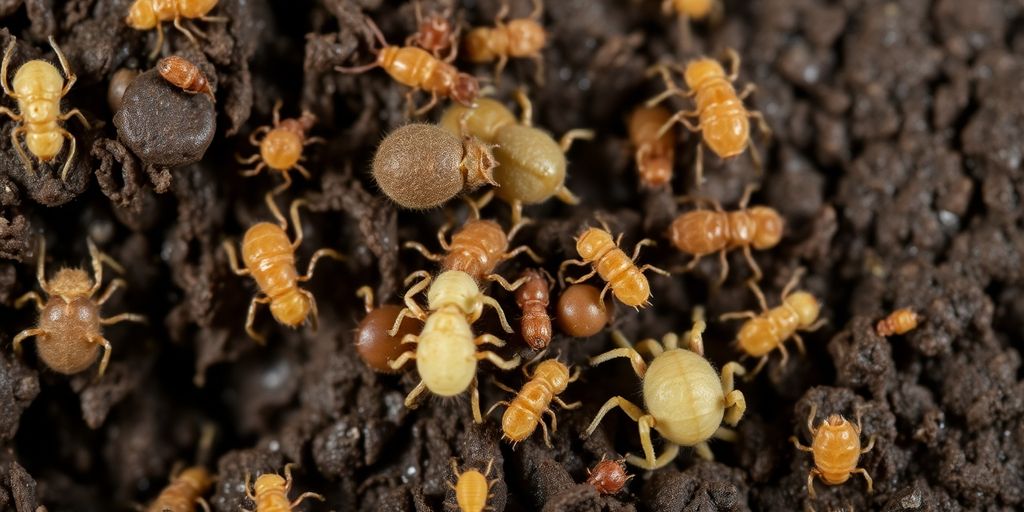
Soil mite pictures are becoming increasingly important in scientific research. High-quality images, especially those from electron microscopes, allow researchers to accurately identify species and study their morphology in detail. This is particularly useful for taxonomic studies and understanding evolutionary relationships. Think about it: trying to describe the intricate details of a mite’s exoskeleton without a clear picture? Nearly impossible! Images also help in documenting the distribution of different mite species across various ecosystems.
Using Pictures for Public Awareness
Pictures are a fantastic way to raise public awareness about the importance of soil mites. Most people don’t even realize these tiny creatures exist, let alone understand their role in maintaining healthy ecosystems. Showing visually appealing images of soil mites can spark curiosity and interest. For example, you could use images in:
- Museum exhibits
- Online articles
- Social media campaigns
By showcasing the beauty and diversity of soil mites, we can encourage people to appreciate the hidden world beneath our feet and support conservation efforts. It’s all about making the invisible visible.
Creating Educational Resources for Students
Soil mite pictures can be invaluable tools for teaching students about soil ecology and biodiversity. Instead of just reading about mites in a textbook, students can actually see what they look like. This can make learning more engaging and memorable. Here are some ways to use images in educational resources:
- Interactive identification keys: Students can use pictures to identify different mite species based on their physical characteristics.
- Classroom presentations: Images can illustrate the life cycle, feeding habits, and ecological roles of soil mites.
- Lab activities: Students can examine soil samples under a microscope and compare what they see to reference images. This helps them develop observation and identification skills. It’s also important to teach students about pest mite species and their impact on gardens.
The Fascination with Soil Mite Aesthetics
Artistic Interpretations of Soil Mites
Soil mites, often unseen, possess a hidden beauty that has captured the imagination of artists and scientists alike. Their intricate structures and diverse forms provide a unique source of inspiration. Artists use various mediums to portray these tiny creatures, highlighting their textures, colors, and shapes. These artistic interpretations range from detailed drawings and paintings to abstract sculptures, each offering a different perspective on the aesthetic appeal of soil mites. It’s interesting how something so small can inspire such creativity.
Cultural Significance of Mite Imagery
While not always overt, mite imagery can hold cultural significance in certain contexts. In some indigenous cultures, small creatures like mites are seen as symbols of resilience, adaptability, or the interconnectedness of life. While direct representations of mites may be rare, their symbolic presence can be found in folklore, traditional art, and even agricultural practices. The cultural significance of these tiny creatures is often tied to their role in maintaining soil health and fertility. It’s a subtle but important connection.
Exhibitions Featuring Soil Mite Photography
Exhibitions dedicated to soil mite photography are becoming increasingly popular, showcasing the stunning detail and diversity of these organisms. These exhibitions often feature macro and electron microscopy images, revealing the intricate structures and vibrant colors of soil mites. Such exhibitions serve not only to educate the public about the importance of soil ecosystems but also to highlight the aesthetic beauty of these often-overlooked creatures. If you’re interested in insect damage, these exhibitions are a great place to start. These events can include:
- Traveling exhibits at natural history museums
- Online galleries showcasing digital images
- Local displays at universities and research institutions
The growing interest in soil mite photography reflects a broader appreciation for the hidden wonders of the natural world. By showcasing the beauty and complexity of these tiny creatures, we can inspire a greater sense of environmental awareness and stewardship.
Wrapping Up Our Journey into the World of Soil Mites
So, there you have it! The tiny world of soil mites is way more interesting than most people think. From their unique shapes to their important roles in the ecosystem, these little creatures deserve a closer look. Sure, they might be small, but they pack a punch when it comes to biodiversity. Plus, the images we can capture of them, especially with advanced techniques like SEM, really show off their details. It’s a reminder that even the smallest beings can have a big impact on our environment. So next time you’re digging in the dirt, remember there’s a whole world of mites down there, just waiting to be discovered!
Frequently Asked Questions
What are soil mites?
Soil mites are tiny creatures that live in the soil. They help break down dead plants and animals, making nutrients available for plants.
Why are pictures of soil mites important?
Pictures help scientists and students learn about soil mites. They can see details that are hard to notice with the naked eye.
How do you take pictures of soil mites?
You can use macro photography techniques or electron microscopes to get clear images of soil mites.
What do soil mites do in the ecosystem?
Soil mites are important decomposers. They help recycle nutrients and improve soil health.
Are all soil mites the same?
No, there are many different types of soil mites, each with unique features and roles in the ecosystem.
How can soil mite pictures be used in education?
They can be used in scientific research, to raise public awareness, and to create learning materials for students.